
Building a BNPL service from 0 to 1
Delivery Hero (foodpanda, foodora), Q4’25–Q1’26

ROLE
UI/UX design | User research | Regulatory & compliance design | CRM & lifecycle communications
MARKETS
Philippines, Hong Kong, Norway
COLLABORATED WITH
Product Manager, UX Researcher, Product Rollout, CRM team, Engineering
Postpaid is the first credit product (BNPL) on our platform. It allows users to spend from a pre-approved credit limit and repay later on a fixed date.
I led the end-to-end design from discovery to MVP launch. I designed the management and repayment journeys while navigating multi-country compliance dependencies, contributed to the CRM communication strategy including a new suite of transactional emails.
I drove the postpaid roadmap planning by presenting improvements to Product leadership for alignment.

What we've learned
UXR
Moderated interviews
Unmoderated survey
Usability testing
I planned and conducted moderated sessions with users in EU and APAC pilot markets to dig deeper into their concerns and reduce launch risk.
Users' biggest concern
Designing a BNPL experience that is transparent and supportive
1
Transparent fees and spending limit during onboarding
Clear communication on fees and spending limit upfront
Reusable onboarding module for the team to experiment with different touchpoints and triggers
Content experimentation on USP of postpaid
2
Clear management and funds presentation
Permanent entry point on account to access, manage and monitor postpaid usage
Clear and concise display of usage, due amount and repayment details
3
Seamless auto-repayment to never miss a bill and manual repayment with clear breakdown for users who like to have full control
Auto-repayment management to easily change the saved repayment card
Breakdown view of all unpaid transactions involved in a bill for verification before making a repayment
Activating postpaid
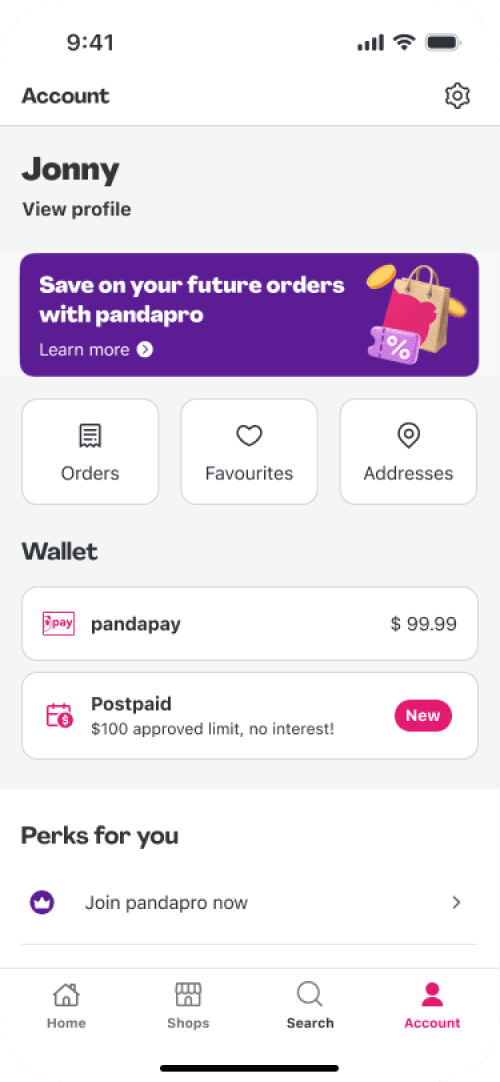
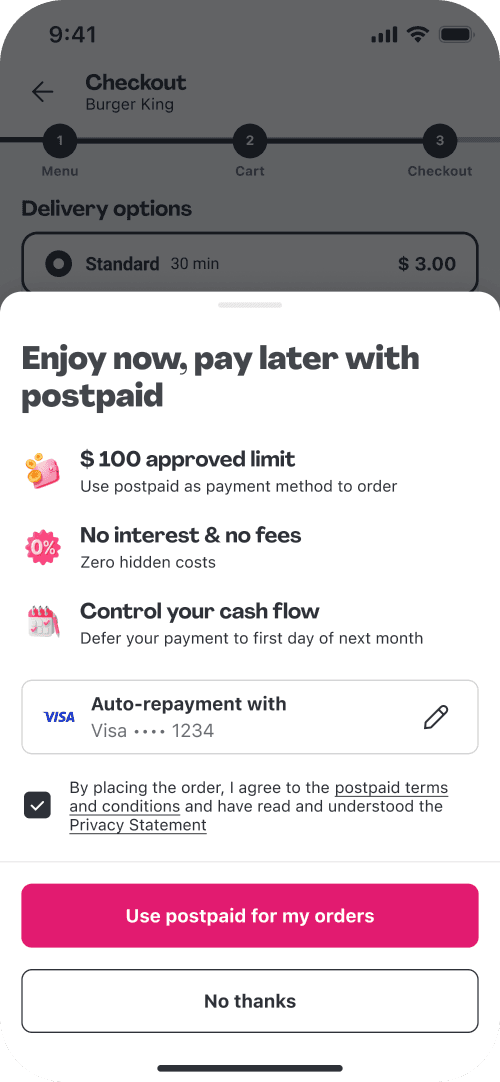
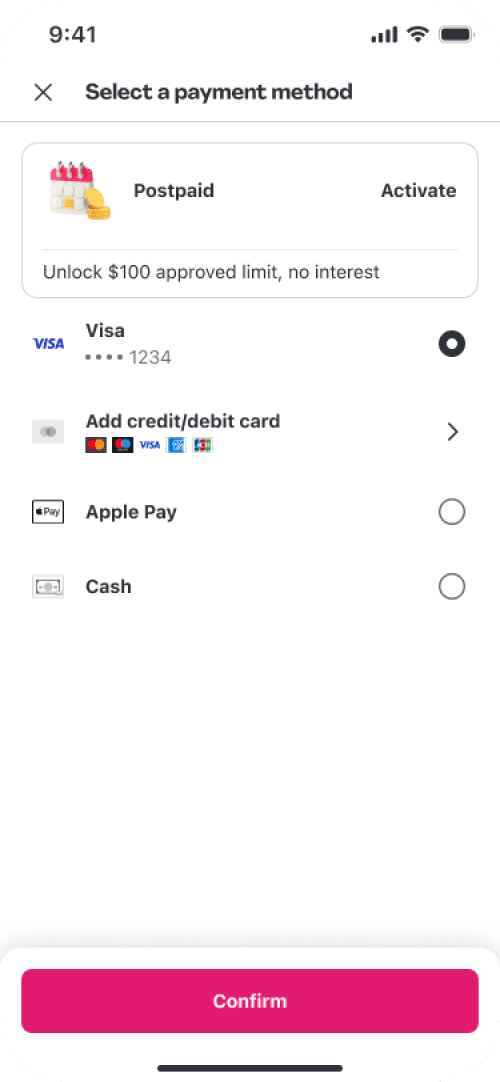
Transparent onboarding
From user research, I identified the key information users weigh before activating Postpaid: the limit, interest and fees.
There was a lot of back and forth on word choice: the copy had to be clear to users and comply with local regulations.

Managing postpaid


Showing contextual amounts across journeys
Available amount on the checkout payment method page, so users know they have enough for the order
Due amount on the account page, so users can track usage ahead of repayment

Bill repayment


The most important part of repayment is:
What happens if the repayment fails?
Multiple touchpoints to communicate overdue bills
Additional communication outside the app to reach users

Beyond in-app experience
Instead of relying solely on in-app communication, I proposed a full CRM strategy spanning email to WhatsApp.
Users don’t order food delivery every day, and 60% of our APAC users don’t have push notifications enabled, so important Postpaid messages would be missed. I benchmarked and reached out to other Delivery Hero entities to understand which communication strategy would work for our users.
As a result, I got CRM into the MVP launch scope and recommended more touchpoints to improve activation and education communication in subsequent phases.
What's next after MVP?
In my design discovery, I started with the end-state experience in mind and went through rounds of discussions with stakeholders to define the MVP scope.
After the MVP scope was defined, I grouped improvement ideas into two buckets: lowering default rate and driving postpaid adoption. Depending on experiment results, the team can decide which metric to focus on.
I drove several alignment sessions and presentations to share the roadmap planning with product leadership. This sped up quarterly planning for the fintech team because we had prepared ahead.
More case studies
Improve payment experience
CAROUSELL | PAYMENTS
Increased ~10% overall initialised transactions
